Kasa Smart
-
4.5
-
Developer
TP-LINK Research America
-
Category
Lifestyle
-
Version
3.3.700
-
Android OS
4.4
-
Downloads
500M
-
Content rating
0
Pro
👍 Kasa Smart’s app simplifies setup and daily use with an intuitive interface and quick Wi‑Fi pairing—most devices require no separate hub. Guided setup wizards, clear device grouping, and responsive remote controls let users install and manage lights, plugs, and cameras in minutes, reducing friction for smart‑home newcomers and busy households.
👍 Kasa supports a wide ecosystem of devices—smart plugs, bulbs, light strips, cameras, and switches—so you can build an integrated home system without brand fragmentation. Seamless compatibility with Amazon Alexa, Google Assistant, and IFTTT enables voice control and cross‑platform automation, making it easy to group devices and create multi‑device scenes.
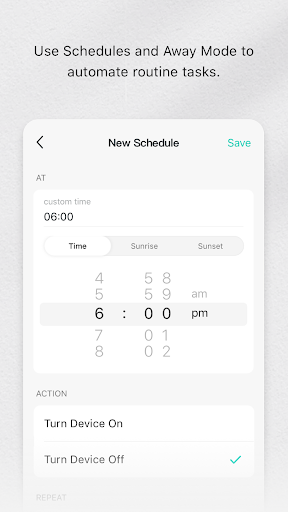
👍 Powerful automation and energy insights set Kasa apart: intuitive scheduling, timers, Away Mode, and Smart Actions automate daily routines, while energy‑monitoring plugs report consumption to help cut costs. Regular firmware updates and user sharing functions add security and convenience, so households can optimize efficiency and maintain reliable device performance.
Con
👎 Kasa Smart has limited ecosystem compatibility — it doesn’t offer native Apple HomeKit support and relies mainly on Alexa, Google Assistant, and IFTTT. That restricted integration can frustrate users who need seamless cross-platform control or wish to unify devices under a broader smart-home hub, reducing flexibility for multi-vendor setups.
👎 Kasa Smart depends heavily on a TP-Link account and cloud services for remote access and many features. If the cloud is down or your internet is unstable, local control can be limited. Requiring account sign-in also raises privacy concerns for users who prefer fully local, offline smart-home solutions.
👎 The app’s automation and scheduling capabilities are basic compared with advanced smart-home platforms. Users report limited trigger options, no complex conditional rules, and occasional UI inconsistencies. Performance issues — such as slow responses, sporadic device disconnections, or firmware update hiccups — can undermine reliability for critical automation.
Screenshots