BP Tracker
-
4.8
-
Developer
Appsky Hong Kong Limited
-
Category
Health & Fitness
-
Version
1.9.8
-
Android OS
Varies with device
-
Downloads
730M
-
Content rating
0
Pro
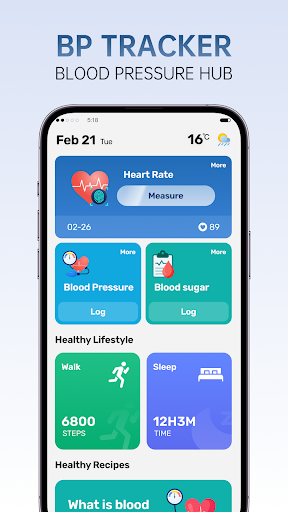
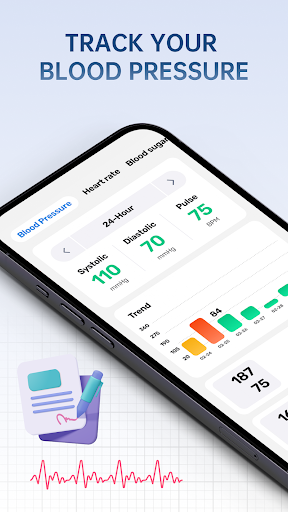
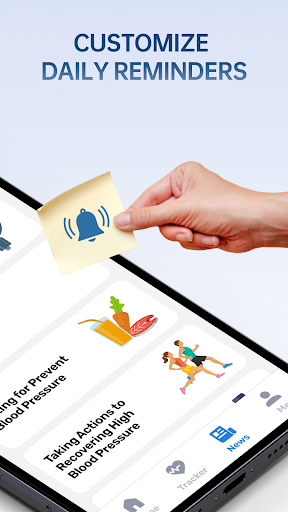
👍 Fast, intuitive logging and clear visualizations let users record blood pressure in seconds and spot trends over time. Automatic averages, daily/weekly charts, and customizable reminders make monitoring consistent and meaningful, helping users and clinicians quickly identify patterns and evaluate treatment effectiveness with color-coded ranges and exportable charts for appointments.
👍 Personalized insights and symptom tracking translate raw readings into actionable guidance. Medication logs, goal setting, and trend-based alerts help patients stay on plan while generating clinician-ready reports or CSV/PDF exports, and clear visual summaries for clinic visits. This empowers informed medication adjustments and collaborative decision-making with healthcare providers.
👍 Secure data storage and convenient sync ensure readings are preserved across devices and readily available for care teams. Customizable alert thresholds, unit preferences (mmHg/kPa), and flexible export options simplify long-term tracking, support telehealth consultations, and make sharing accurate historical data with providers straightforward, with optional encrypted cloud backup and password-protected access for privacy-conscious users.
Con
👎 Device compatibility can be limited: the app may not pair reliably with all blood pressure cuffs or supports only a small set of models, forcing manual entry. That reduces convenience, increases the chance of input errors, and frustrates users who expect seamless Bluetooth syncing across multiple devices.
👎 Several valuable features sit behind a subscription: advanced analytics, long-term trend reports, cloud backup, and custom reminders often require paid plans. For casual users or those on a budget, recurring costs can outweigh benefits, leaving the free version feeling too basic for effective blood pressure management.
👎 Exporting and interoperability are weak: data export options may be limited to basic CSV or PDF files, and integrations with Apple Health, Google Fit, or electronic health records can be inconsistent or missing. This makes sharing readings with clinicians harder and reduces usefulness within a broader health ecosystem.
Screenshots